
Berlin is a city that refuses to be defined by just one era. It is a striking patchwork of tragic 20th-century history, grand imperial architecture, and a cutting-edge creative subculture that sets global trends. Whether you are a dedicated history buff, an art enthusiast, or an urban explorer, Germany’s capital offers an unforgettable journey.
If you are planning your itinerary, here are the 10 absolute best things to do in Berlin.
1. Stand Before the Iconic Brandenburg Gate
No trip to Berlin is complete without standing in front of the Brandenburg Gate (Brandenburger Tor). Built in 1791 as a symbol of peace, this grand neoclassical monument stood stranded in the “no man’s land” between East and West Germany during the Cold War. Today, it stands completely restored as a powerful global symbol of German unity and freedom. Step by during the day for great photos, but be sure to return at night when the sandstone pillars are beautifully illuminated.
2. Walk the Historic East Side Gallery
The Berlin Wall once divided a city, but today, its longest remaining stretch serves as a canvas for freedom. The East Side Gallery features a 1.3-kilometer section of the wall covered in over 100 open-air murals painted by artists from all over the world. Famous works like the iconic “Fraternal Kiss” offer a poignant, visual reminder of hope, politics, and the fall of the Iron Curtain in 1989.
3. Take in the Views from the Reichstag Building Dome
The Reichstag is the historic seat of the German parliament, seamlessly blending old-world architecture with modern design. Its defining feature is a massive, futuristic glass dome designed by architect Norman Foster. Visitors can walk up a spiraling ramp inside the dome to enjoy spectacular 360-degree panoramic views of the city skyline, while looking down directly into the parliamentary debating chamber below—a design meant to symbolize political transparency.
4. Explore UNESCO-Listed Museum Island
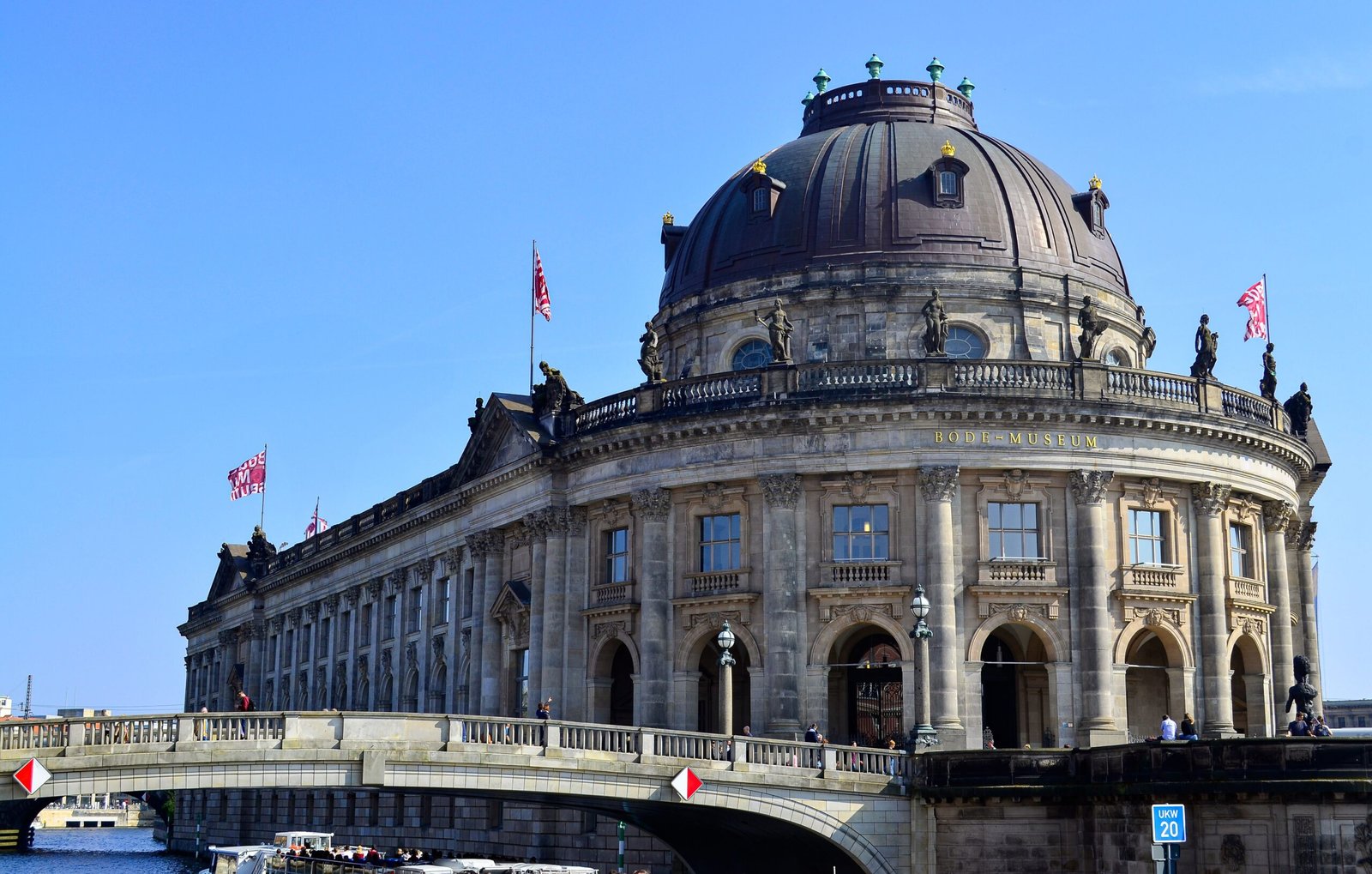
Situated right on the Spree River, Museum Island (Museumsinsel) is a magnificent architectural ensemble that holds five world-renowned museums. Art and history lovers can easily spend days here. Highlights include the spectacular Altes Museum and the Neues Museum, which famously houses the pristine, 3,300-year-old bust of Egyptian Queen Nefertiti. Note that while the famous Pergamon Museum is completely closed for extensive renovations until mid-2027, its nearby “Das Panorama” exhibition remains open to visitors.
5. Reflect at the Memorial to the Murdered Jews of Europe
Located just a short walk from the Brandenburg Gate, this vast, sobering Holocaust Memorial is a deeply moving experience. Designed by architect Peter Eisenman, it consists of 2,711 gray concrete slabs (stelae) arranged in a grid pattern across a sloping field. Walking through the narrow, undulating pathways creates a deliberate, unsettling sense of disorientation and isolation, serving as a powerful tribute to the victims of the Holocaust.
6. Dive Into Everyday History at the DDR Museum
If you want to know what it actually felt like to live behind the Iron Curtain, the DDR Museum offers an immersive, hands-on experience. Unlike traditional museums, you are actively encouraged to open drawers, turn dials, and explore artifacts. You can step inside a perfectly reconstructed East German high-rise apartment, watch authentic state television, and even take a virtual test drive in a vintage, two-stroke Trabant car.
7. View the City from the Berlin TV Tower
Dominating the city’s skyline at 368 meters, the Berlin TV Tower (Fernsehturm) is the tallest structure in Germany. Built by the East German government in the 1960s as a symbol of secular communist power, it is now an beloved city landmark. An ultra-fast elevator whisks you up to the observation deck at 203 meters in just 40 seconds, offering unrivaled views stretching across the entire cityscape.
8. Experience the Vibe at Mauerpark on Sunday
To catch a glimpse of local Berlin culture, head north to Mauerpark on a Sunday. Once part of the Berlin Wall’s “death strip,” the space has been completely transformed into a buzzing urban park. On Sundays, it hosts a massive flea market filled with vintage clothes, retro furniture, and local street food. The main event, however, is the legendary outdoor “Bearpit Karaoke,” where hundreds gather in an amphitheater to cheer on brave singers.
9. Step Back in Time at Checkpoint Charlie
Checkpoint Charlie was the most famous border crossing between the American and Soviet sectors during the Cold War. While the immediate area is highly commercialized today, seeing the reconstructed guard house, sandbags, and the famous sign reading “You are leaving the American Sector” helps visitors visualize the tense geopolitical standoff that gripped the city for decades.
10. Relax in the Tiergarten and Café am Neuen See
When you need a break from historical sightseeing, retreat into the Tiergarten, Berlin’s sprawling central park. Larger than Hyde Park in London, it features shaded walking paths, quiet lawns, and hidden memorials. For the perfect afternoon, head to the Café am Neuen See, a scenic lakeside beer garden hidden inside the park where you can enjoy a cold German beer, fresh pretzels, or even rent a rowboat.
Frequently Asked Questions
What is the best month to visit Berlin?
The best time to visit Berlin is during the late spring (May to June) or early autumn (September to October). During these months, the weather is mild and pleasant, making it perfect for walking and exploring the outdoor markets and beer gardens without the heavy summer crowds.
Is Berlin an expensive city for tourists?
Compared to other major Western European capitals like Paris or London, Berlin remains relatively affordable. Budget travelers can easily find cheap street food (like the famous Currywurst or Döner Kebab), inexpensive public transit options, and many top attractions—like the East Side Gallery and Brandenburg Gate—are completely free.
How many days do you need to see Berlin?
To truly appreciate Berlin’s major historic sites, museums, and distinct neighborhoods, a trip of 3 to 4 days is highly recommended. This gives you enough time to explore central sights like Mitte without rushing, while leaving room for a day trip to Potsdam or a relaxed Sunday afternoon at Mauerpark.
Is the tap water safe to drink in Berlin?
Yes, tap water in Berlin is completely safe and subject to strict quality controls. However, be aware that it has a high mineral content (hard water), which can sometimes affect the taste if you aren’t used to it. Most restaurants will still expect you to buy bottled water.
Is the Pergamon Museum fully open to the public right now?
No, the main Pergamon Museum building is completely closed to the public for a massive structural renovation project. The renovated North Wing and central hall (including the famous Pergamon Altar) are scheduled to officially reopen on June 4, 2027. In the meantime, you can visit the nearby temporary exhibition building, ‘Pergamonmuseum. Das Panorama’, to see key artifacts combined with a 360-degree installation by Yadegar Asisi.




Add comment